
Understanding the genetic cause of your low calcium
If you or a loved one are living with low calcium (hypocalcemia) from nonsurgical hypoparathyroidism, confirming whether ADH1 is the cause can help shape more personalized care.

Are you experiencing pins and needles, muscle cramps, or brain fog? Ongoing symptoms of low calcium from nonsurgical hypoparathyroidism may point to an underlying genetic cause, like autosomal dominant hypocalcemia type 1 (ADH1).
ADH1 is a rare genetic condition that affects how the body regulates calcium. Consider genetic testing if you experience any of these signs.
Frequent muscle cramps, tingling, or "pins and needles"
Unexplained episodes that could be caused by low calcium levels
A history of kidney stones or calcifications
Family members with similar signs and symptoms or a history of low calcium
If you or a loved one are living with low calcium (hypocalcemia) from nonsurgical hypoparathyroidism, confirming whether ADH1 is the cause can help shape more personalized care.
A single diagnosis can unlock answers for the whole family.
Diagnostic clarity
An ADH1 diagnosis can bring clarity to past experiences, and open the door to next steps.
Informed care
One no-cost genetic test can confirm a diagnosis of ADH1 and help shape more personalized care.
Meaningful impact
Because ADH1 can run in families, one confirmed ADH1 diagnosis can inform generations of loved ones.
You don’t have to navigate genetic testing alone. A genetic counselor is available at no cost to help guide your journey from start to finish—answering questions, helping you access testing, explaining results, and talking through next steps with you and your family.
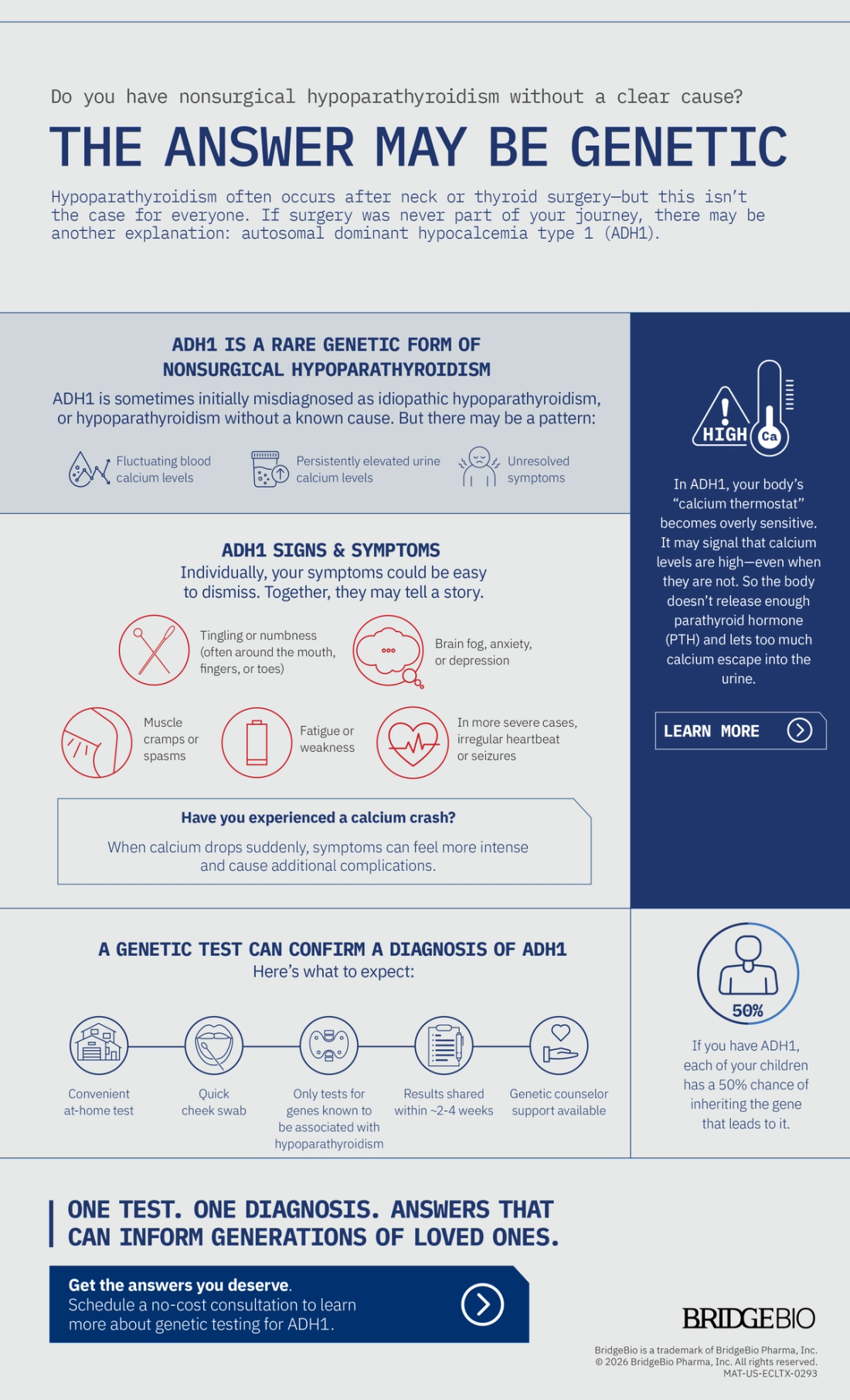
A quick overview of ADH1, how it affects the body, and the genetic testing process.
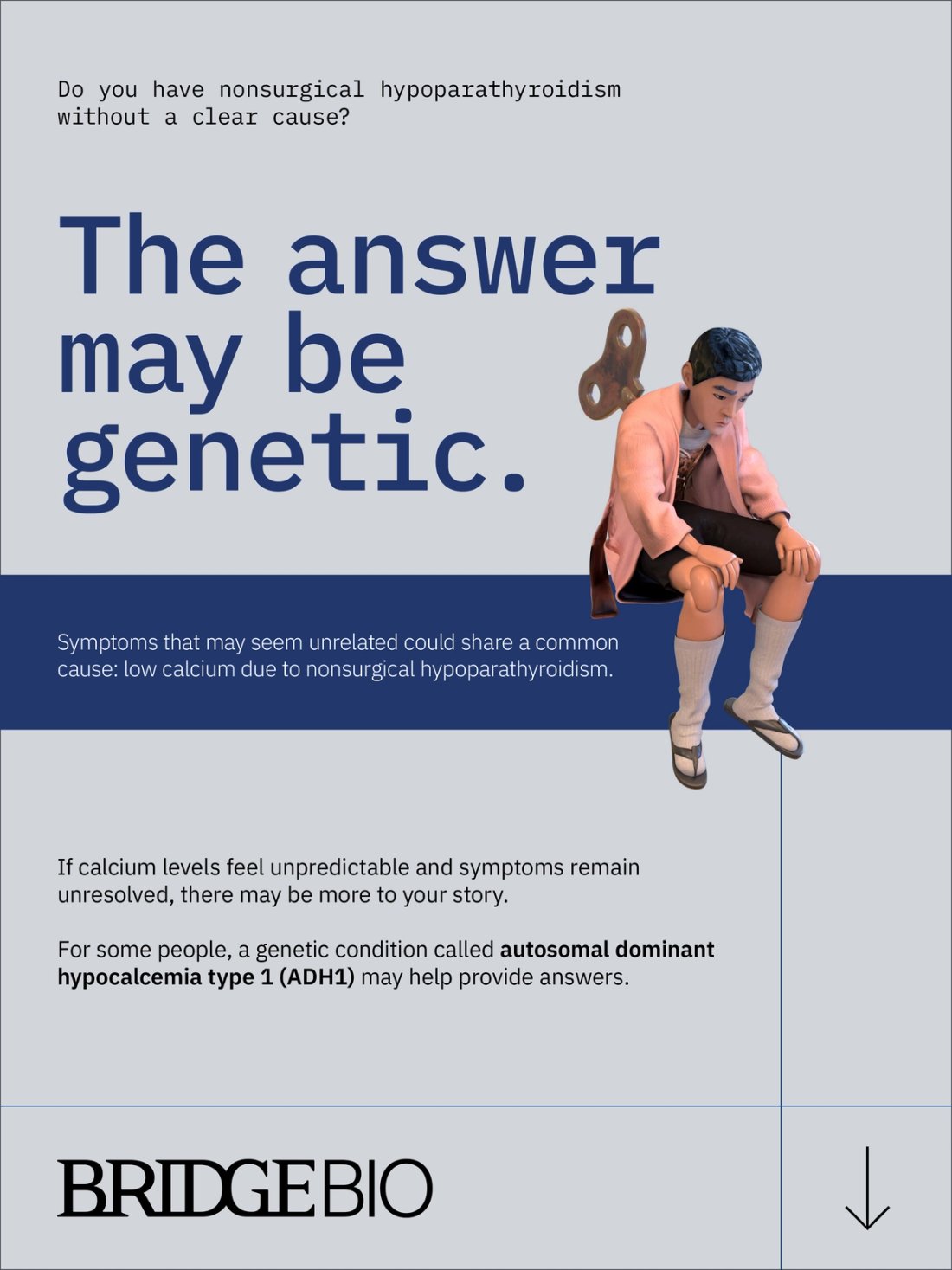
Discover key information about ADH1, including why symptoms occur, how the condition is inherited, and the role of genetic testing.
Tools, conversation starters, and resources to support discussions with your family about ADH1 and genetic testing.