PROPEL
A Holistic Approach for Achondroplasia Research
A Holistic Approach for Achondroplasia Research
About the PROPEL Study
The PROPEL clinical program is studying a wide range of outcomes related to growth, medical challenges, and quality of life in children and adolescents with achondroplasia.1
PROPEL is an observational study, in which no treatment is given. PROPEL 2 and PROPEL 3 are interventional studies, in which participants receive infigratinib and/or placebo.1–3
A placebo is a treatment with no active properties, such as a sugar pill. Participants from PROPEL 2 and PROPEL 3 have the option to join the PROPEL open-label extension study, where they may continue to receive the investigational drug until their growth is complete.1–4
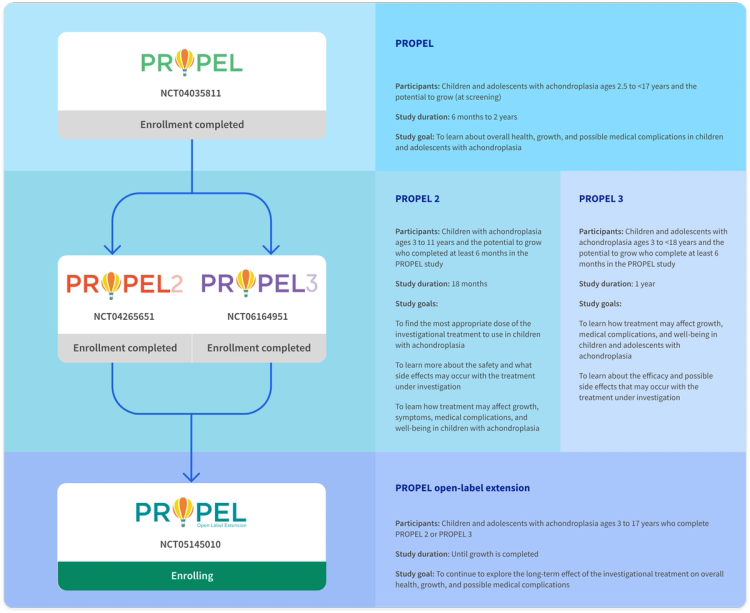
The infant & toddler is the only recruiting trial for the PROPEL program. All studies have completed enrollment.1–6
PROPEL 3 Study Design
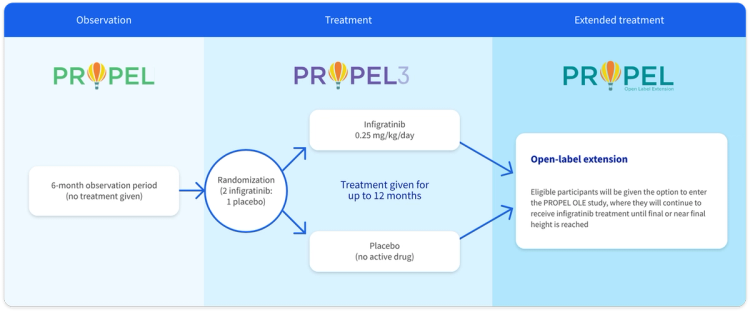
PROPEL 3 is the next step in our process of developing a potential treatment option for FGFR3-driven skeletal dysplasias. PROPEL 3 is the first double-blinded study to compare the efficacy and safety of the oral investigational agent infigratinib with placebo in children and adolescents who have achondroplasia.2,7
Participants who complete at least 6 months in the PROPEL study may enroll in PROPEL 3. The primary goal of PROPEL 3 is to understand the effect of oral infigratinib on bone growth, as measured by annual height velocity (or AHV). This study will also look at the impact of the investigational treatment on physical functioning and quality of life.2