What Is ADH1?
Autosomal Dominant Hypocalcemia Type 1 (ADH1) is a common form of genetic hypoparathyroidism.1
Autosomal Dominant Hypocalcemia Type 1 (ADH1) is a common form of genetic hypoparathyroidism.1
ADH1 Impact
13,000
13,000 people in the U.S. are estimated to carry CASR genetic variants.1
~20%+
20%+ of nonsurgical hypoparathyroidism cases are caused by variants in the CASR gene.2
50%
A child has a 50% chance of having ADH1 if they have an affected parent.3
1 in 25k
1 in 25,000 estimated people are affected by ADH1.1
About ADH1
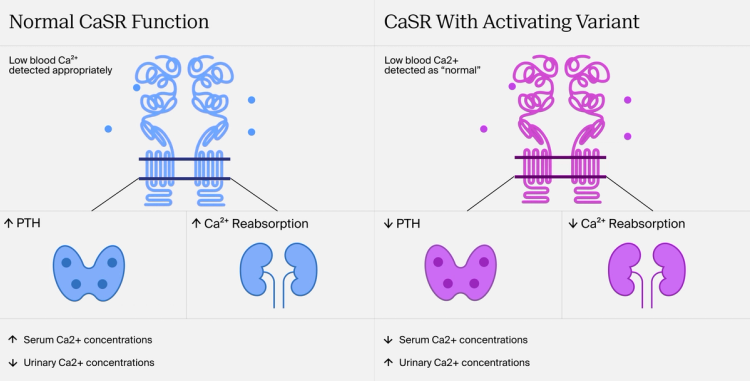
ADH1 is a common form of genetic hypoparathyroidism caused by gain-of-function variants in the calcium-sensing receptor gene (CASR).1 The calcium-sensing receptor (CaSR) constantly monitors and balances blood calcium (Ca2+) levels by regulating parathyroid hormone (PTH) secretion and calcium (Ca2+) reabsorption in the kidneys.1,4,5
In ADH1, the genetic variants cause the CaSR to be more sensitive and responsive to calcium. As a result, low blood calcium levels are detected as “normal” by the CaSR.4 This false physiological perception leads to decreased secretion of PTH, low levels of calcium in the blood (hypocalcemia), and high levels of calcium in the urine (hypercalciuria).4,5

Clinical Features of ADH1
People with ADH1 typically experience hypocalcemia, hypercalciuria, and inappropriately low levels of PTH.4 Symptoms of hypocalcemia may include severe muscle cramps, muscle spasms (tetany), a burning or prickling sensation in the hands or feet (paresthesia), and seizures.4 Hypercalciuria may result in kidney calcification (nephrocalcinosis), kidney stones (nephrolithiasis), and kidney failure.4,5

Community’s Unmet Need
Current standard of care for people with ADH1 (calcium and active vitamin D supplementation) may cause calcium levels in the urine to become too high (hypercalciuria), leading to kidney complications. To reduce this risk, a common treatment goal is to maintain blood calcium levels at the low end of the normal range or slightly below it.4 As a result, many people with ADH1 continue to have symptoms associated with low blood calcium (hypocalcemia) that impact their daily function and overall quality of life.3,4
ADH1 is often misdiagnosed as idiopathic hypoparathyroidism or idiopathic hypocalcemia.4 Some people with ADH1 never learn of the underlying genetic cause of their condition and may never receive optimal management. Given the potentially serious clinical features of ADH1, it is important to determine when genetic testing may be appropriate for people with nonsurgical hypoparathyroidism.3,4