What is Achondroplasia?

Achondroplasia is a rare, genetic condition that affects bone growth.

Achondroplasia is the most common type of skeletal dysplasia caused by a change in the FGFR3 (fibroblast growth factor receptor 3) gene, which slows bone growth, leading to disproportionate short stature.1

Directly targeting FGFR3 can address achondroplasia at the source.

Achondroplasia Prevalence

The genetic variants that cause achondroplasia can occur either by chance or from being passed down by a parent with the condition.1

Most of the time, the variant occurs in families with no prior history of achondroplasia. In families where one parent has the condition, there is a 50% chance that the variant will be passed down to the child.1

80%

80% of people with achondroplasia have no family history of the condition1

1 in 25K

1 in 25,000 babies are born with achondroplasia1

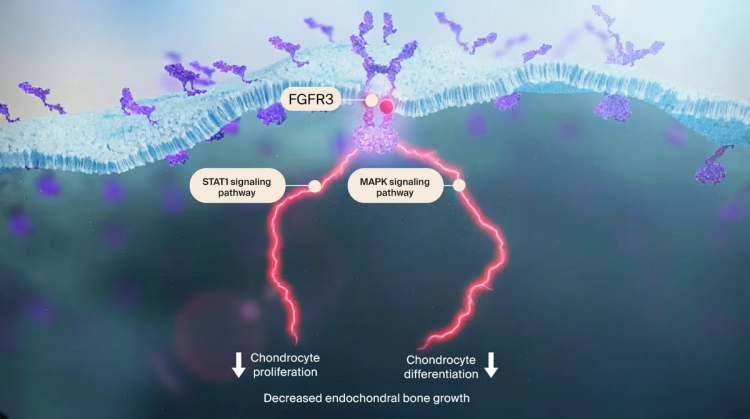
FGFR3 activation and downstream STAT1 and MAPK signaling pathways affecting chondrocyte proliferation and differentiation

Overactive FGFR3 signaling is the root cause of achondroplasia

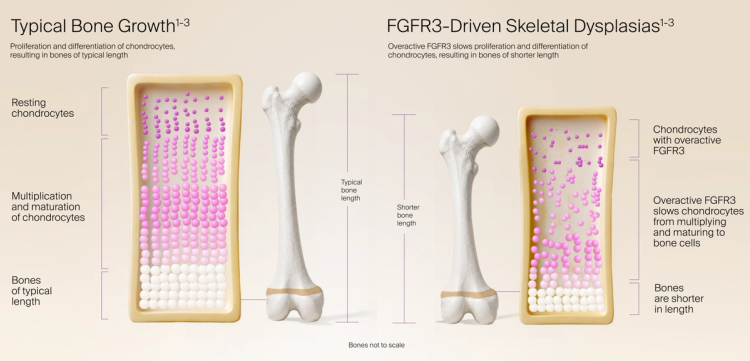
In achondroplasia, overactivity of the FGFR3 protein slows endochondral bone growth and leads to disproportionate short stature.

Overactive FGFR3 reduces endochondral bone growth through 2 major downstream signaling cascades2,3:

  • Excessive STAT1 signaling reduces chondrocyte proliferation
  • Excessive MAPK signaling reduces chondrocyte differentiation

There is a clinical need for a therapy in achondroplasia that directly addresses the root cause: FGFR3

Comparison of average bone growth and FGFR3-driven skeletal dysplasias, where overactive FGFR3 slows chondrocyte growth

A Varied Journey for Individuals

Medical Complications

The way bones grow in people with achondroplasia can lead to specific medical challenges. Multiple systems in the body can be affected, and individuals may experience medical complications at different stages of life.4–6

Disrupted skeletal development in achondroplasia is associated with complications such as narrowing at the base of the skull, sleep-disordered breathing, otitis media, narrowing of the spinal canal, and lower-limb malalignment—some of which may require longitudinal monitoring, supportive care, or surgical intervention.4,6

People living with achondroplasia should have regular check-ups by an experienced, multidisciplinary healthcare team.6

Some complications may improve on their own, while others may require treatment or surgery. Some children may benefit from early intervention.6

Looking to the future

Even when families see potential benefits, the practical realities of current therapies and interventions can shape how they weigh their options—making clear, choice-oriented support especially important. Factors that may be considered include therapy goals, potential benefits and risks, route and frequency of administration, and individual preferences and circumstances.

It's normal for families to tailor their choices to what feels right for them, as the decision to initiate therapy can be complex. Families remain hopeful for a different future for achondroplasia therapies.7

BridgeBio is actively investigating an oral therapy designed to inhibit overactive FGFR3 signaling, offering a potential new approach to therapy and another administration option.

MyAchonJourney.com
A site built to empower families with reliable information, practical resources, and trusted connections to navigate each stage of life with confidence and a positive outlook.

Definitions of key terms can be found in the glossary.

References