Closing the treatment gap will take more than good science. It will require regulators, policymakers, researchers, manufacturers, people living with rare conditions, and advocates to work together to create an environment in which promising science can become medicines, and those medicines can reach the people who need them the most.
More than 30 million Americans live with a rare disease, yet fewer than 5% of rare diseases have an FDA-approved treatment. Behind those numbers are people living with rare conditions and their families who are still waiting, often without an established pathway to develop medicines for their condition, without time to spare, and significant unmet need.
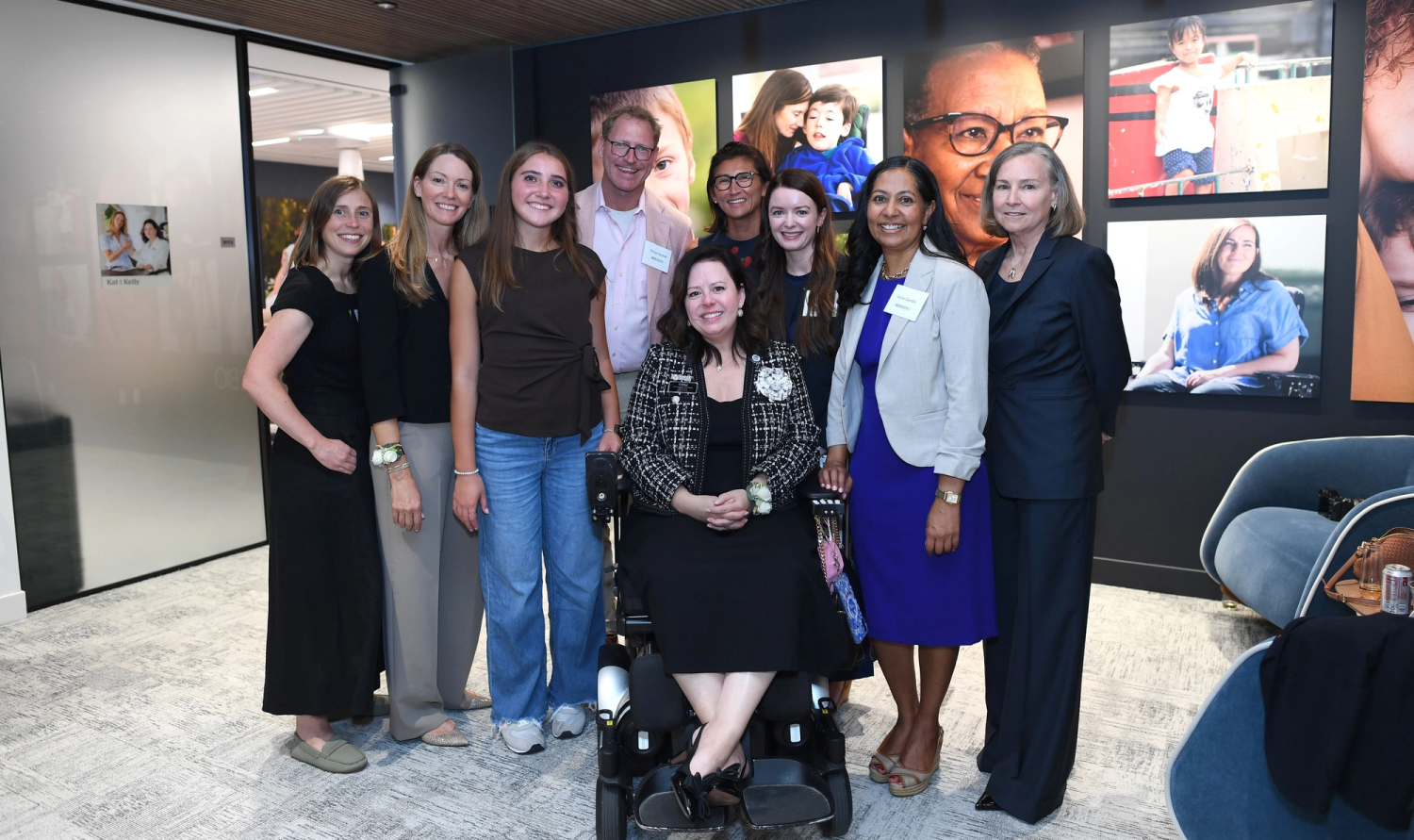
That is why BridgeBio opened an office in Washington, D.C.
Being in Washington gives us more opportunities to engage directly and consistently with the people shaping the path for drug development. It strengthens our ability to collaborate with regulators on the challenges unique to developing medicines for rare diseases and to work with policymakers on policies that support innovation, investment, and patient access. Just as importantly, it gives us a place to bring those conversations together.
Our office will serve as a home for BridgeBio’s D.C.-based regulatory affairs, government affairs, and policy teams, but we want it to be more than that. We want it to be a place where we can hear directly from people living with rare conditions and their families; where advocates, researchers, and companies can identify barriers together; and where conversations can lead to practical solutions for people living with rare diseases.
Honoring the Patients and Advocates Who Keep Us Focused
At BridgeBio, we have a longstanding tradition of naming our conference rooms and other important spaces for people living with rare conditions we have been fortunate enough to know. Their stories remind us why our work matters and why every minute counts. In Washington, we chose to name our conference room after two important advocates who have helped ensure that the voices of patients with limb-girdle muscular dystrophy (LGMD) are heard: Kat Bryant Knudson and Kelly Brazzo.
Kat, who lives with LGMD2I/R9, is the Founder and President of the Speak Foundation. Kelly, who is a care partner to someone living with LGMD2I/R9, is the CEO and Founder of the Cure LGMD2i Foundation. Both understand the realities of rare disease in deeply personal ways, and both have turned that experience into action on behalf of their community.
They have worked tirelessly to educate policymakers, engage regulators, bring families together, and push for progress when the path forward was unclear. They have also been important partners to BridgeBio, reminding us that the people living with a rare disease, and their care partners, have the greatest understanding of the burden, and what a meaningful treatment benefit would look like.
The Kat|Kelly Conference Room honors this type of leadership. Their photographs and stories will have a permanent place here as a reminder of who must remain at the center of every conversation about drug development and health policy.

Supporting a Drug Development Environment That Works for Rare Disease
Rare diseases do not fit neatly within development frameworks designed for more common conditions, or conditions with established clinical development and regulatory precedent. Patient populations are small, the biology is complex, and natural history is limited. Traditional clinical trial designs are impractical or, in some circumstances, impossible. With roughly 95% of rare diseases lacking an approved treatment, we have not scratched the surface of addressing these needs for the community. A strong rare disease drug development environment must recognize these realities; the realities that require us to apply development and regulatory standards thoughtfully, using the flexibility already available to evaluate each disease, each medicine, and each body of evidence on its own merits.
Collaboration with regulators is critical to getting this right. Early and sustained engagement can help clarify expectations, address uncertainty, and prevent avoidable delays. This collaboration can ensure that laws and policies keep pace with scientific advances and continue to support investment in areas of significant unmet need.
While approval is one measure of success, we fulfill our purpose when people living with rare conditions can access new treatments. We must also address the barriers that can prevent paeople living with rare conditions from accessing new treatments, while sustaining the innovation needed to develop the next generation of rare disease medicines.
Keeping Pace With the Science
There is extraordinary momentum in rare disease efforts today. We understand more about the genetic basis of disease than ever before, and emerging technologies are creating possibilities that would have been difficult to imagine even a decade ago.
The BridgeBio D.C. office represents our commitment to helping to support a regulatory landscape that works better for people living with rare conditions: one grounded in rigorous science, strengthened by collaboration, supportive of continued innovation, focused on access, and informed by the people living with these diseases every day.
The door is open. We invite advocates, people living with rare conditions, regulators, policymakers, researchers, and others working across the rare disease community to engage with us in this space, challenge us, and help us move with greater urgency.
Every minute counts for patients waiting. The Kat|Kelly Conference Room will remind us of that every day, and of the advocates who make sure we never forget it.

Learn more about LGMD2I/R9 here.
To learn more about the LGMD2I/R9 community + Kelly & Kat’s work, visit: CureLGMD2i or The Speak Foundation.