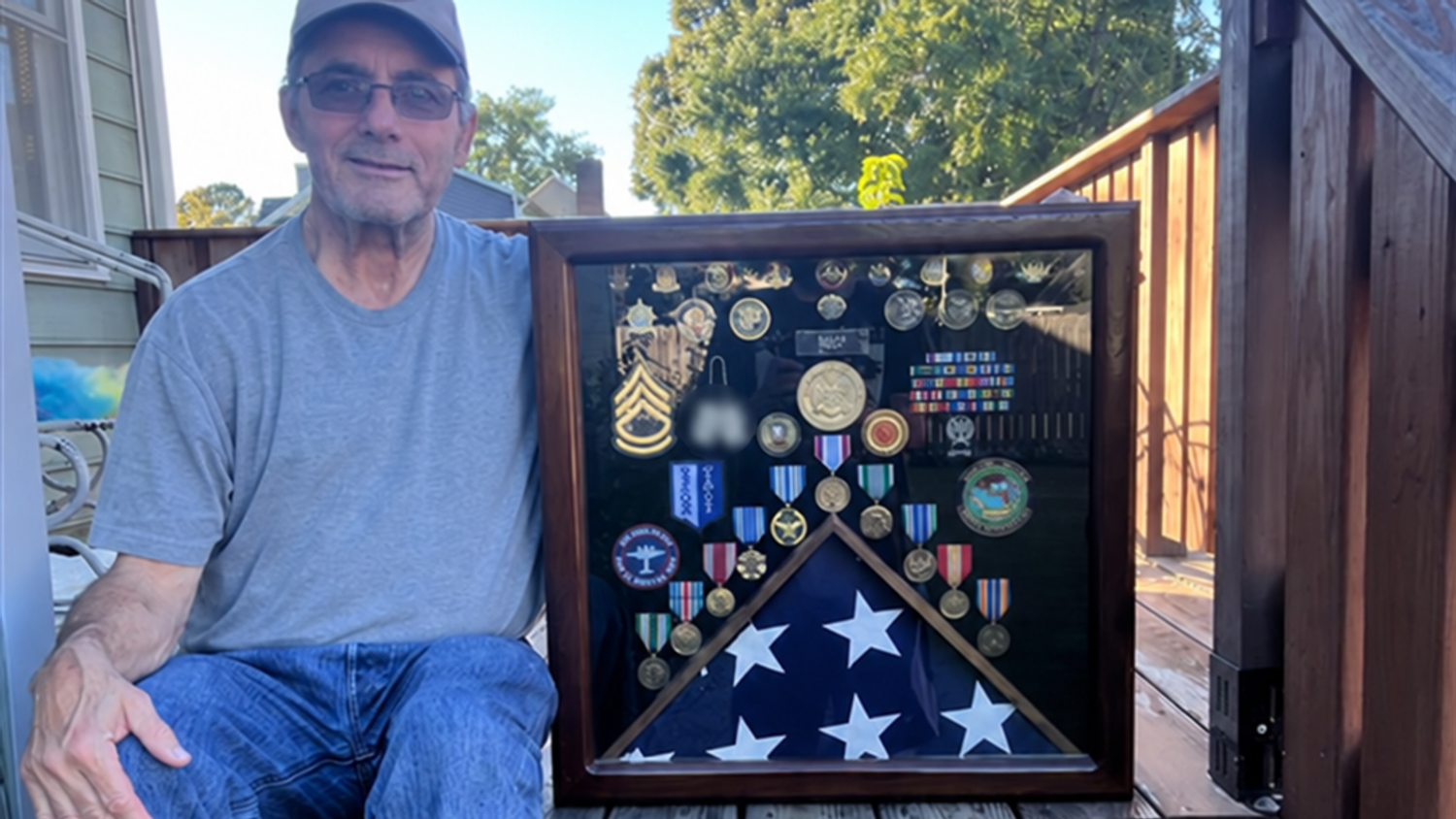
Jimmy retired in 2004. It would be roughly two more decades before he got answers. Getting them didn't come naturally. For Jimmy, genetic testing offered a way to understand a family history that had often gone unspoken. Getting tested was a simple step, and he saw value in what the answers could mean for him and future generations.

Jimmy proudly served in the U.S. Army for more than two decades, rising to the rank of Sergeant First Class. Specializing in signal communications, he helped establish critical communications infrastructure ahead of troop deployments. His career took him from Louisiana to the Pentagon, England, the Balkans, and beyond. He deployed multiple times, often spending more than six months away from home and loved ones, and earned multiple awards for his outstanding service and impact to the mission.

Physical fitness was a way of life. Jimmy ran 25 to 30 miles each week and exercised daily. When muscle cramps and spasms showed up, he assumed they came with the training. When his hands tingled, he figured he needed something to eat. He pushed through, the way he'd been taught to, never knowing these symptoms could be connected to an underlying rare disease.
‘In my family, hypoparathyroidism was erased from family conversations and history. My grandmother saw it as something shameful to carry and hid it from the rest of us.’
At age 62, he learned he had been living his entire life with autosomal dominant hypocalcemia type 1 (ADH1), a genetic form of hypoparathyroidism that affects how the body regulates calcium and can run in families. The diagnosis gave a name to symptoms he had spent decades pushing through.
Jimmy shared his results with his primary care provider, who referred him to an endocrinologist. He remembers doing push-ups and stretching in the exam room at his first appointment. When the physician walked in, she was surprised to find him so active, having expected someone with greater physical limitations. For Jimmy, that moment captured something important about ADH1: a person can look healthy and strong on the outside while dealing with symptoms no one else can see.
‘Getting genetic testing was not a hard thing to do. It takes seconds, it is a cheek swab. To me, the test is knowledge and wisdom for you that way you have the information to do the right thing for you, your family, and future generations.’

The diagnosis also helped him connect the dots across his family. Today, he knows nine relatives living with ADH1, spanning more than one generation. Speaking openly about that connection is part of why he shares his story. He wants families to have open conversations about health history.
‘You know, ADH1 is something that doesn't need to be silenced. You know, back in the '60s, '70s, a lot of families wanted to keep things silent. Let's not.’
Jimmy hopes his experience encourages others to have family conversations, talk with their doctor, and take their symptoms seriously. For him, understanding the cause of his symptoms brought knowledge he could use—and share with his family.
‘I'm not telling anybody what to do, I'm saying, don't let pride or stubbornness keep you from your own answers.’
—