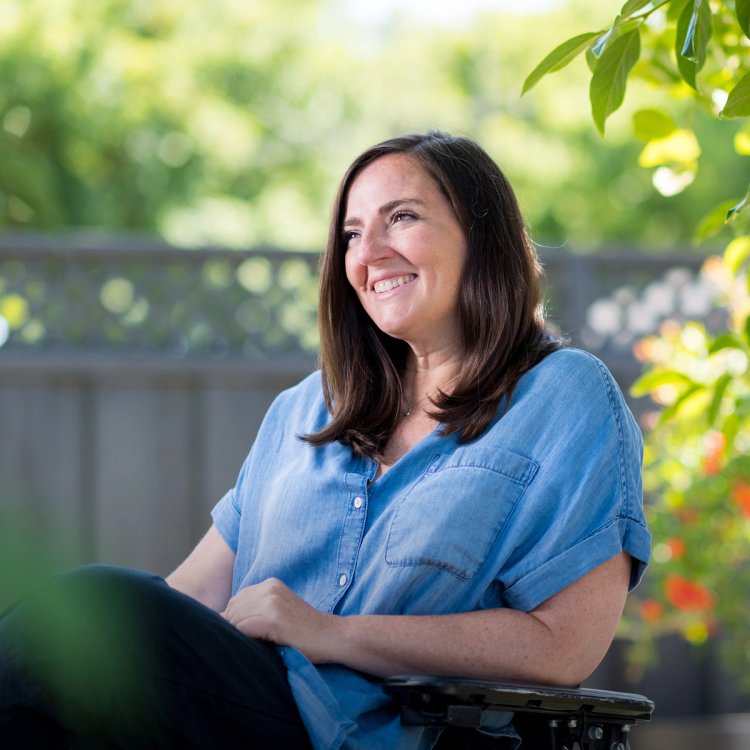
Meet Julie
Living with Limb-girdle Muscular Dystrophy Type 2I/R9
Living with Limb-girdle Muscular Dystrophy Type 2I/R9
Julie is a mother of three, a family therapist, and an active member of her neighborhood, church, and children’s schools. She is also engaged in the LGMD2I/R9 community.
Her symptoms of limb-girdle muscular dystrophy type 2I/R9 (LGMD2I/R9) began in early childhood. Growing up in a busy home with five siblings, she remembers a happy, active household but also feeling different. She was often the last to finish when running, playing, or riding bikes, and she struggled with stairs. Without a diagnosis, Julie began to think the problem was her, that she just was not trying hard enough.
“It was at least 10 years of going to different doctors and being told, ‘You just have to try harder.’ I thought I was lazy, that it was my fault I couldn’t keep up with my brothers and sisters,” she says.
A turning point came during a family trip, when Julie couldn’t walk down a slope to a waterfall. While her parents had suspected something wasn’t quite right before the hike, they had never imagined something so serious. In that moment, they saw how much she was struggling, and it became clear that further evaluation was needed. They helped her connect with a Muscular Dystrophy Association clinic, where she began a more formal diagnostic journey. Julie was initially misdiagnosed with facioscapulohumeral muscular dystrophy (FSHD) in 1997. In 2000, a muscle biopsy led to a diagnosis of limb-girdle muscular dystrophy. It wasn’t until 2003, after additional testing, that she received a confirmed diagnosis of FKRP-related LGMD2I/R9.
Julie describes finally learning the truth as both a relief and a shock. “When you get a diagnosis, you feel relieved to have an answer, but also terrified about what’s ahead. It has a huge impact on your mental health.”
Today, Julie uses a scooter for mobility and has adjusted her routines to fit her needs. She remains active in her community, helping to start an after-school drama program and supporting an art initiative through the PTA. She continues to balance her work, her family, and her own health while advocating for research and a treatment.
It was at least 10 years of going to different doctors and being told, ‘You just have to try harder.’ I thought I was lazy, that it was my fault I couldn’t keep up with my brothers and sisters.”
When you get a diagnosis, you feel relieved to have an answer, but also terrified about what’s ahead. It has a huge impact on your mental health.”
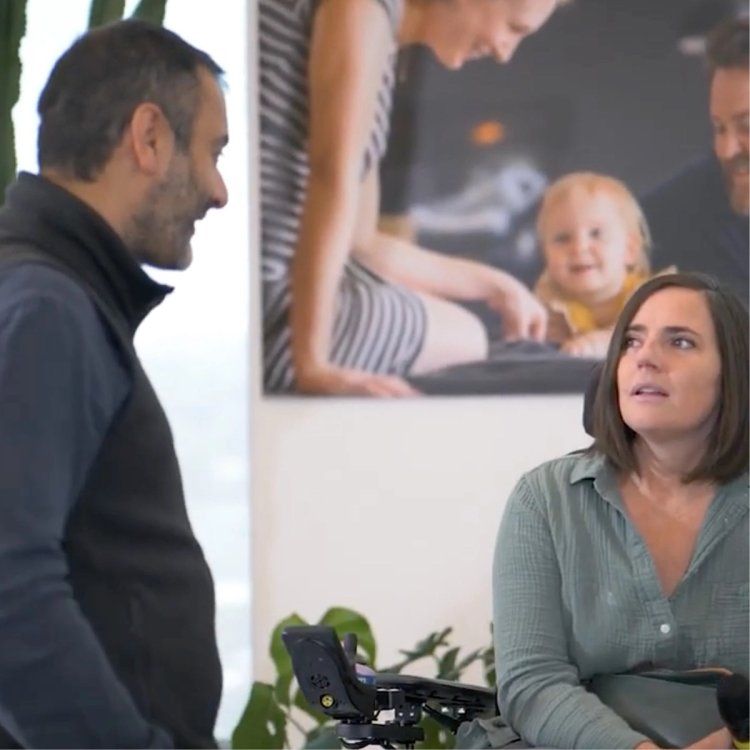
Patient advocates, scientists, and drug developers come together to facilitate a deeper understanding of Limb-girdle Muscular Dystrophies.

Oct 3, 2024 · 45 min